
Blog
The Paris Campaign: Analyzing Liu Xiaolong and Qiu Zihan’s 2013 French Open Journey

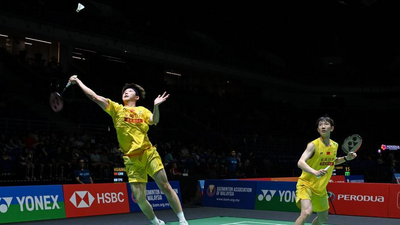
The Paris Campaign: Analyzing Liu Xiaolong and Qiu Zihan’s 2013 French Open Journey
The year 2013 stood as a monumental period for the Chinese men’s doubles badminton tandem of Liu Xiaolong and Qiu Zihan. Earlier that March, they shocked the badminton world by capturing the prestigious All England Open title. By October, the dynamic duo arrived at the Stade Pierre de Coubertin in Paris, France. They were aiming to cement their status as the sport’s next dominant pair at the 2013 French Super Series. The tournament showcased their signature high-octane offensive style. However, it also exposed the tactical challenges that would later come to define their competitive legacy.
The Quarter-Final Masterclass
The peak of their French campaign arrived during the quarter-final round on October 25, 2013. Liu and Qiu faced a formidable obstacle in the elite Danish pairing of Mathias Boe and Carsten Mogensen. The Danish veterans were celebrated for their precise service-return games and clinical front-court defense.
The match evolved into a fascinating clash of contrast styles. Liu Xiaolong, utilizing his rare left-handed angles, created blistering cross-court openings from the backline. Meanwhile, the right-handed Qiu Zihan dominated the mid-court transitions. He frequently cut off Danish clears to maintain offensive pressure. Through relentless attacking pace and rapid-fire flat exchanges, the young Chinese stars broke down the legendary defenses of Boe and Mogensen. They secured a high-profile victory that underscored their immense potential on the global circuit. Action photography captured during this intense quarter-final battle remains documented on Wikimedia Commons.
A Semi-Final Stumble
The momentum from their quarter-final triumph collided with a tactical wall on October 26 during the semi-finals. Liu and Qiu shared the court against the unseeded but highly dangerous Indonesian pairing of Markis Kido and Marcus Fernaldi Gideon. The match, which is available to watch on the official BWF YouTube Channel, started favorably for the Chinese pair. They dictated the early rallies with their traditional power game, taking the opening game 21-16.
However, the tide turned dramatically in the second game. The Indonesian duo began lifting flatter and wider, systematically bypassing Qiu’s intercept attempts. Kido’s veteran deceptive net play forced Liu and Qiu into defensive postures they generally disliked. The second game slipped away tightly at 19-21. In the deciding third game, the physical and mental strain of breaking down the nimble Indonesians took its toll. Unforced errors crept into the Chinese pair’s performance, culminating in a 14-21 defeat in the final game.
Tactical Legacy and Historical Impact
Their semi-final exit in Paris perfectly mirrored the historical arc of their partnership. While the duo possessed the raw power to achieve a career-high world ranking of No. 4 and claim a silver medal at the 2015 World Championships, consistency remained elusive. Their explosive https://tennispadelvinci.com/ playstyle was devastating when clicking but proved vulnerable against opposition capable of varying the tempo. This systemic inconsistency eventually led to their exclusion from the 2016 Thomas Cup roster. Despite these limitations, their 2013 French Open campaign remains a dazzling case study of modern, fast-paced doubles badminton.