
Blog
The Pinnacle of Fly Fishing: Chasing Trophy Rainbow Trout in Alaska’s Wilderness

The Pinnacle of Fly Fishing: Chasing Trophy Rainbow Trout in Alaska’s Wilderness
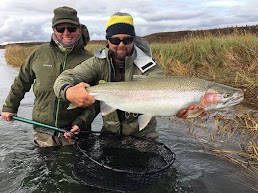
For fly anglers around the world, few experiences match the thrill of holding a wild, trophy-sized rainbow trout in the heart of the Alaskan wilderness. Alaska is globally renowned for hosting some of the most productive freshwater fisheries bigfishmccall.com on Earth. Each year, thousands of anglers journey to its remote rivers, driven by the dream of landing a legendary “bow” that measures over thirty inches. The image of two anglers proudly showcasing a massive, vibrant rainbow trout against a backdrop of sweeping tundra captures the true essence of this ultimate angling pursuit.
The Legendary Fisheries of the Bristol Bay Region
The fish captured in the image is highly characteristic of the world-class specimens found throughout Alaska’s Bristol Bay watershed. Rivers like the Naknek, Kvichak, Alagnak, and Kulik are legendary for their resident rainbow trout populations. Unlike trout in the lower forty-eight states, these fish benefit from an incredibly nutrient-rich ecosystem.
+-----------------------------------+-----------------------------------+
| Seasonal Diet Component | Impact on Trout Growth |
+-----------------------------------+-----------------------------------+
| Early Summer: Salmon Fry & Smolts | Provides an immediate protein |
| | boost after the cold winter. |
+-----------------------------------+-----------------------------------+
| Mid-to-Late Summer: Salmon Eggs | High-fat, easily digestible diet |
| | triggering rapid weight gain. |
+-----------------------------------+-----------------------------------+
| Autumn: Decaying Salmon Flesh | Sustains energy reserves before |
| | the river freezes over. |
+-----------------------------------+-----------------------------------+
This reliable biological cycle allows resident rainbows to achieve massive, thick-bodied proportions, making them fight with the strength and stamina of ocean-run steelhead.
Essential Gear and Techniques for Success
Chasing these powerful predators requires specialized equipment and technical adaptability. Anglers typically utilize fast-action 6-weight to 8-weight fly rods paired with high-quality, large-arbor reels featuring dependable disc drag systems. Depending on the specific month and river conditions, techniques vary significantly:
- Egg Matching: During the peak salmon spawn, dead-drifting indicator rigs with plastic beads that perfectly mimic the color and size of real salmon eggs is highly effective.
- Flesh Flies: As the salmon die off, articulated flesh flies cast into deep slots simulate drifting pieces of meat, attracting the largest trout in the system.
- Streamer Stripping: In the early season, stripping or swinging large leech and sculpin patterns produces aggressive, visual strikes from hungry fish.
Given the cold, unpredictable subarctic climate, wearing top-tier technical apparel—such as the Simms wading jackets worn by the anglers in the image—is critical for staying warm, dry, and focused during long days on the water.
Conservation and the Power of Catch-and-Release
The preservation of Alaska’s pristine trout fisheries relies heavily on strict conservation practices. Because large rainbow trout grow slowly in cold northern waters, a 30-inch fish can easily be over ten years old. Sustaining these populations requires a strict adherence to catch-and-release ethics.
Anglers utilize rubber-mesh landing nets, like the one pictured, to protect the fish’s protective slime layer. Minimizing handling time, keeping the fish submerged in the water as much as possible, and using barbless hooks ensure that these magnificent creatures survive to spawn again, preserving the legacy of Alaska’s wild waters for future generations.